


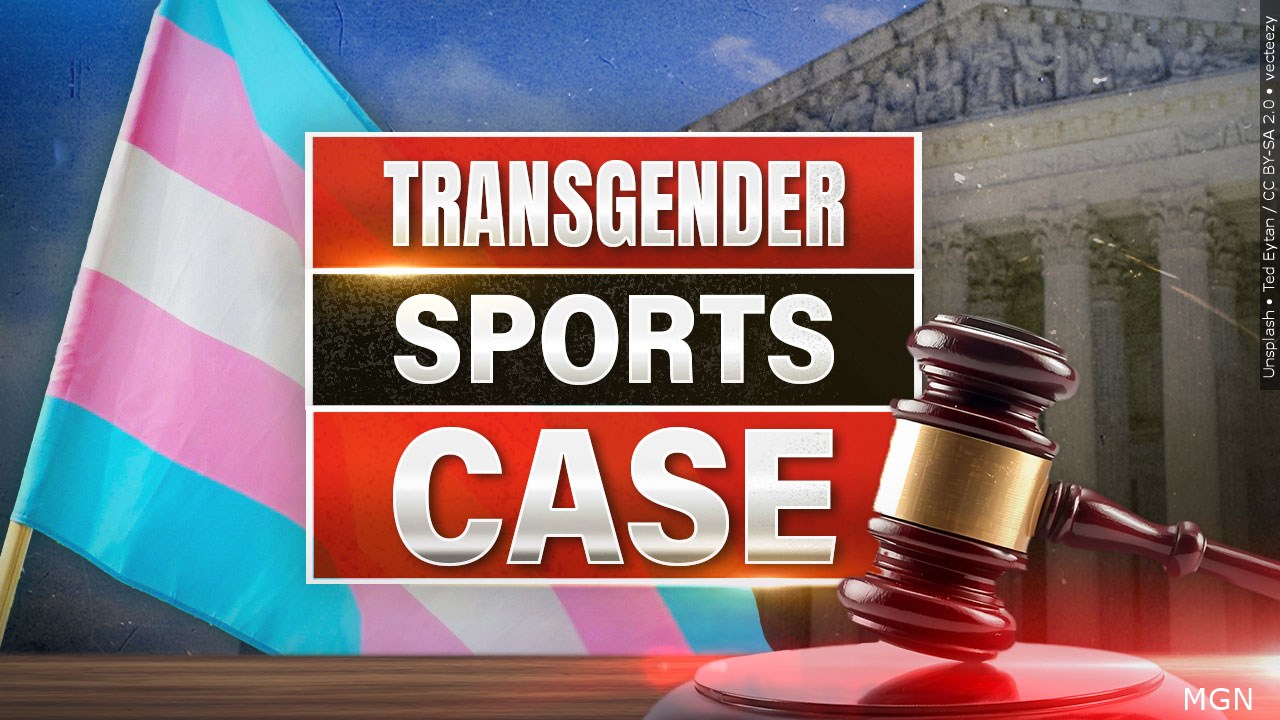
WASHINGTON DC (LOOTPRESS) — The Supreme Court on Tuesday signaled it is likely to uphold state laws that bar transgender athletes from competing in girls’ and women’s school and college sports, a decision that could affect policies nationwide.
The court’s 6–3 conservative majority heard more than three hours of oral arguments in challenges to bans in West Virginia and Idaho, brought by two transgender students who had previously won lower-court rulings allowing them to compete.
Questioning from the justices suggested skepticism that the bans violate the Constitution’s Equal Protection Clause or Title IX, the federal law that prohibits sex discrimination in education. Several justices focused on the Javits Amendment to Title IX, adopted in 1974, which allows sex-based classifications in athletics.
“Javits changed Title IX. It said, you know, sports are different,” Justice Neil Gorsuch said, underscoring the argument that Congress intended to treat athletics separately from other areas of education.
Justice Amy Coney Barrett raised concerns about potential broader consequences of siding with the challengers, questioning whether such a ruling could open the door for biological males to compete on girls’ teams regardless of gender identity.
While the justices acknowledged that scientific evidence on competitive advantages for transgender athletes remains unsettled, the court’s liberal wing appeared to lack the votes needed to prevail on an equal protection claim.
The cases involve Becky Pepper-Jackson, a 15-year-old West Virginia high school student who has taken puberty blockers and estrogen, and Lindsay Hecox, a 25-year-old college student in Idaho who has undergone testosterone suppression and estrogen treatment. Pepper-Jackson’s attorneys argue she never experienced male puberty and therefore gained no athletic advantage. They also note she may be the only athlete in West Virginia affected by the law.
State attorneys countered that the laws are lawful sex-based classifications designed to protect girls’ and women’s sports, pointing to physiological differences between males and females. Idaho’s law states that teams designated for females “should not be open to students of the male sex,” while West Virginia defines gender strictly by reproductive biology at birth.
Justice Brett Kavanaugh emphasized the growth of women’s sports under Title IX, calling it “one of the great successes” of the past 50 years and warning that allowing transgender athletes to compete could undermine those gains. “There’s a harm there, and I think we can’t sweep that aside,” he said.
The arguments were largely restrained, though Justice Samuel Alito pressed a lawyer for Hecox on criticism from female athletes opposed to transgender participation, asking whether they should be labeled bigots. The attorney rejected that characterization.
A ruling is expected to have wide-reaching implications, particularly for the 25 states with similar bans. The court appeared inclined toward a narrow decision limited to sports, potentially avoiding broader impacts on other transgender-related policies, such as restroom access.
The cases come amid a string of setbacks for transgender rights at the high court, including last year’s decision upholding a Tennessee ban on gender transition care for minors and recent rulings allowing restrictions on military service and passport gender markers. At the same time, the court previously ruled in 2020 that federal employment protections extend to gender identity, leaving open questions about how those principles apply under Title IX.
A final decision is expected later this term.