


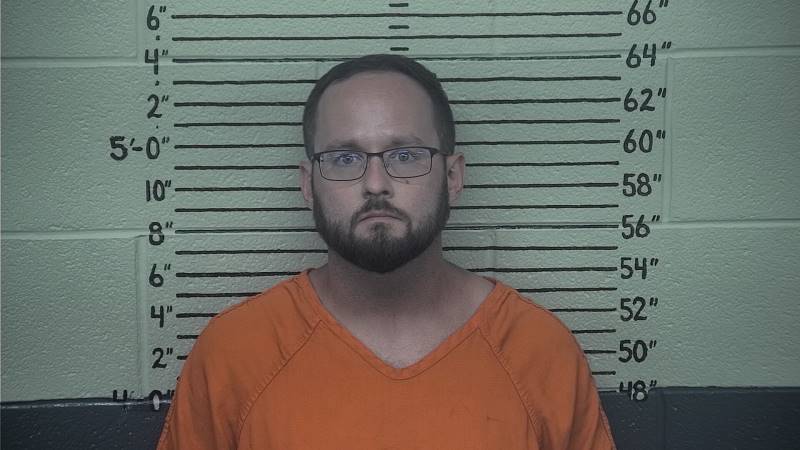
CHARLESTON, WV (LOOTPRESS) — Former West Virginia Delegate Elliott Pritt is asking a federal judge to release him from jail to attend a residential mental health treatment program, while prosecutors argue the proposal would not adequately protect the public or the minor at the center of his child exploitation case.
New filings in U.S. District Court show Pritt has been accepted into a 45- to 60-day program at the Martinsburg VA Medical Center. His attorney is requesting a renewed detention hearing and release on bond conditioned on participation in and successful completion of the program.
Federal prosecutors oppose the request, citing the alleged conduct underlying his charges, messages they say discouraged the minor from reporting him, and a typewritten letter they characterize as evidence of his continued fixation on the child.
The documents provided contain the defense’s requests and the government’s opposition. They do not include a ruling granting or denying release.
Defense revises proposed admission date
Federal Public Defender Wesley P. Page filed Pritt’s initial motion October 21, followed by an amended motion October 22.
The original request proposed an October 27 admission to the Martinsburg program. The amended filing moved the admission date to November 17, explaining that the earlier date proved unworkable because of court and attorney schedules.
An accompanying letter from a VA social worker confirms that Pritt completed a telephone assessment and was accepted into the residential program.
Under the revised proposal, Pritt’s brother, Daniel Pritt, would transport him from the Carter County Detention Center in Grayson, Kentucky, to Martinsburg and provide transportation for necessary court appearances.
The defense requests permission for Pritt to leave jail during the afternoon or evening of November 16 and stay overnight at a hotel near Martinsburg before reporting for admission by 9:30 a.m. November 17. Alternatively, the motion proposes an early-morning departure November 17 for a direct trip to the facility.
Page argues that acceptance into the program constitutes new information warranting another detention hearing. The defense maintains that treatment placement and transportation by Pritt’s brother would reasonably assure his court appearances and the safety of others.
Pritt previously declined to contest detention at proceedings in July and August while reserving the right to revisit the issue, according to the motions.
Prosecutors challenge safeguards in release plan
In an October 23 response, Assistant U.S. Attorney Jennifer Rada Herrald argues that acceptance into a treatment program does not resolve the safety concerns supporting Pritt’s detention.
Prosecutors say the defense has not established whether the VA program could enforce electronic monitoring, prevent Pritt from leaving the facility, restrict access to internet-connected devices or prevent contact with minors.
The government also questions who would supervise compliance with release conditions at the facility and where Pritt would go after completing treatment.
According to the response, the defense did not identify a VA employee willing to serve as a third-party custodian or provide anticipated testimony explaining how the program would enforce restrictions.
Prosecutors argue those omissions are particularly significant because the alleged offenses involved online communications and a minor student.
If the court considers granting release, the government asks that a VA representative first testify about the facility’s ability to comply with applicable release conditions.
Government describes alleged communications with student
The prosecution’s filing also provides additional details about its allegations against Pritt, a former Fayette County teacher.
According to the government, Pritt began paying particular attention to several female eighth-grade students during the 2024–2025 school year and communicated with them through Roblox, Snapchat and Instagram outside school-approved platforms.
Prosecutors allege he later focused on one student, identified in the filing as “Minor 1,” and used Snapchat to engage in sexual conversations, send explicit photographs and request sexually explicit images.
The response alleges that physical sexual encounters occurred in his classroom when the girl was 14.
Prosecutors say the physical encounters ended around January 2026, when Pritt went on leave to serve in the Legislature, but inappropriate communications continued.
The government further alleges Pritt became jealous after the girl began dating another teenager and gave her gifts, including a bracelet and a bottle of his cologne.
Letter and messages cited in opposition
Attached to the prosecution’s response is a letter Pritt allegedly gave the minor.
The response quotes the letter as stating that “being with you never felt wrong to me” and repeatedly expressing enduring romantic feelings.
Prosecutors argue the letter demonstrates an intense fixation on the child and supports their position that he should remain detained. That characterization is the government’s argument, not a finding by the court.
The response also describes June 2026 Snapchat messages in which Pritt allegedly urged the girl not to disclose what happened, warning that police involvement would attract publicity and cost him his family and livelihood.
According to prosecutors, the girl documented those messages and disclosed the alleged abuse to her parents in July. Investigators subsequently searched Pritt’s home and seized a typewriter, the filing states.
The government says the minor’s parents oppose release because of concerns about its effect on her recovery. Prosecutors also state that their recommendation for continued detention is consistent with that of the U.S. Probation Office.
Three federal charges remain pending
Pritt was arrested July 22 and indicted August 18 on charges involving production of child sexual abuse material, enticement of a minor and witness tampering, according to the defense filings.
He previously pleaded not guilty. Following his arrest, he resigned from the West Virginia House of Delegates and was dismissed from his teaching position.
The release motions concern where Pritt would remain while his case proceeds; they do not resolve the criminal charges.
Pritt is presumed innocent unless proven guilty beyond a reasonable doubt.