


FAYETTEVILLE, WV (LOOTPRESS) – Fayette County school officials say expanding school choice options, including the West Virginia HOPE Scholarship, private schools and homeschooling, are having a growing financial and educational impact on the county’s public school system.
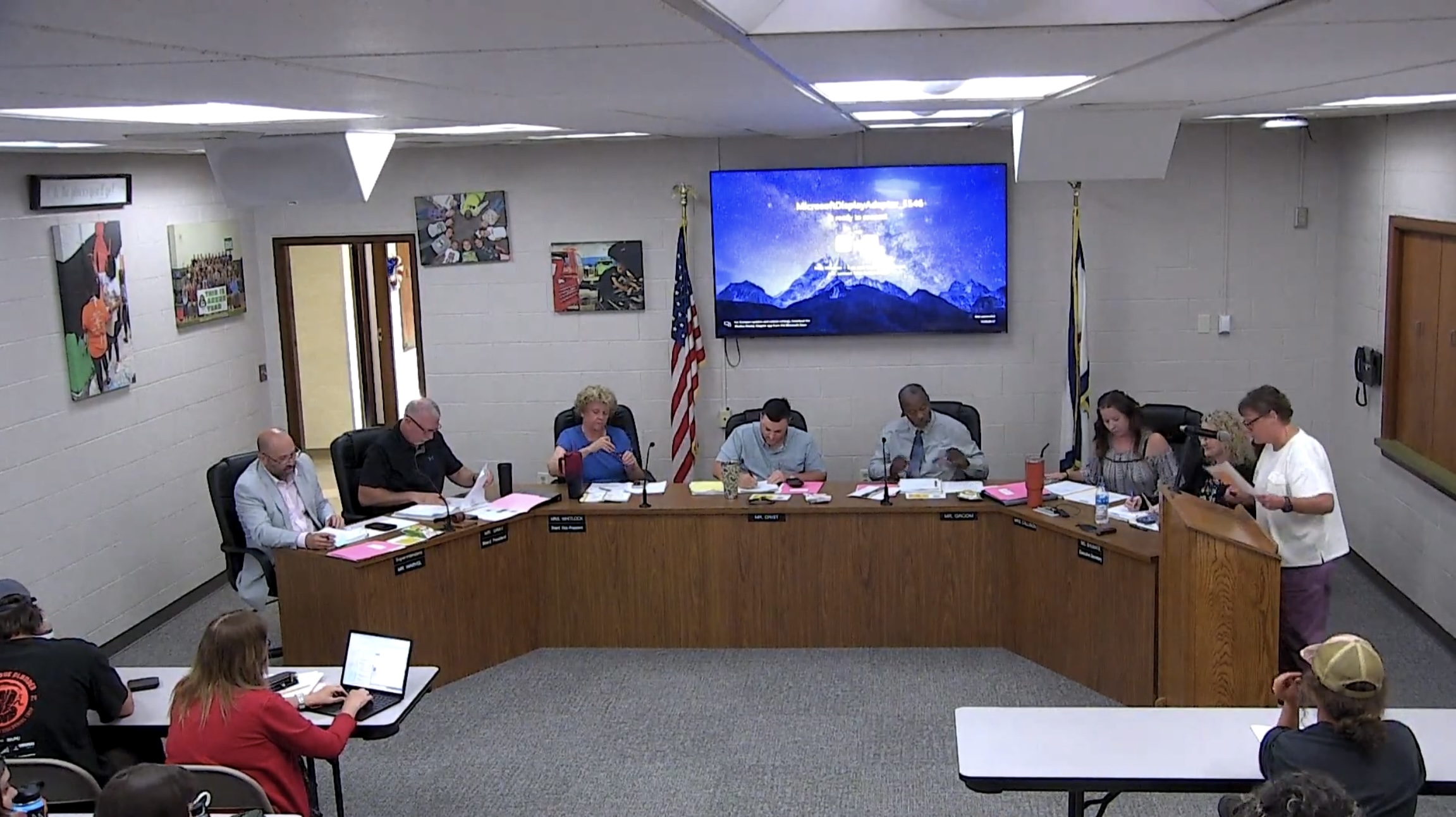
During Tuesday evening’s regular meeting of the Fayette County Board of Education, Cynthia Hedrick, the district’s director of attendance and virtual education, presented board members with an overview of student enrollment trends and the increasing number of students leaving Fayette County Schools for alternative educational options.
Hedrick said the issue extends beyond enrollment numbers and is affecting school funding, staffing and student services.
“I think it’s very important that we look at these numbers and how this is affecting us, our schools, our communities and our state,” Hedrick said. “Whether it’s HOPE, charter or whatever school choice it is, it is something that is affecting us today.”
According to Hedrick, 243 Fayette County students attended nonpublic schools during the 2025-26 school year through the HOPE Scholarship program and other school choice options. She noted that many participating students were in the early elementary grades, with 61% of scholarship recipients enrolled in kindergarten through third grade.
Hedrick reviewed enrollment figures for several private schools serving Fayette County students, including Mount View Christian, Saints Peter and Paul, Solid Rock Christian, Mount Hope Christian, Mountain State Montessori, My Life My Power, Greater Beckley Christian School and several schools outside the county.
The presentation also included updated figures for the upcoming 2026-27 school year. Hedrick told board members that 115 students are currently enrolled in nonpublic schools through the HOPE Scholarship while another 101 students are participating through individualized instruction programs (IIP), the homeschool option under the scholarship.
Using the state’s projected 2026-27 HOPE Scholarship award amount of $5,435.62 per student, Hedrick asked board members to calculate the financial impact.
Multiplying the scholarship amount by 226 participating students equates to roughly $1.2 million.
“This is for fiscal year 2027 — money that we are losing in our county,” Hedrick said.
Later, she asked board members to calculate the impact of 502 students using the same per-pupil amount, which totaled nearly $2.7 million.
“We can look at this as dollars and cents, which we have to because we have to be fiscally responsible,” Hedrick said. “But I think we also need to look at it educationally and at what’s occurring, and that scares me a lot. That’s a lot, a lot, a lot of money.”
Hedrick also expressed concern about students leaving the public school system altogether.
“There are families that do amazing jobs, and I’ve said that and I will continue to say that,” she said. “But losing students scares me, and that’s my job.”
Superintendent David Warvel echoed Hedrick’s concerns, noting that the state’s per-pupil funding amount does not reflect the total cost of educating a child.
“If you look at that number, that number sounds low to educate a child in a whole school year, right?” Warvel said. “That’s not the right number. That’s just what we get from the state, but the county picks up the rest. It’s not that cheap to educate any child.”
Warvel also discussed rising operational costs, including transportation and special education services, saying county school systems continue to face increasing financial pressures as enrollment declines.
During the discussion, Board President Pat Gray noted that enrollment losses also affect district staffing.
“As we lose children to school-choice options, employees are also lost,” Gray said.
Board member Joby Groom encouraged parents to carefully research educational alternatives before deciding to leave the public school system.
“I think, too, when you do the research — which I encourage parents to do — do the research and see just how beneficial these schools are to your children,” Groom said. “The key factor is the money. The money. It’s not money that’s used on your kids. It’s just money that goes into somebody else’s pocket.”
Groom also expressed concern about some schools participating in school-choice programs.
“They found out that a lot of these schools are not educating your kids,” Groom said. “They just want that money. Your kids are sitting in a room looking at a computer all day long. There are no social skills, nothing going on. They have busted quite a few of these people who set these so-called schools up and did absolutely nothing with them except take your money.”
The discussion comes as West Virginia’s HOPE Scholarship continues to expand statewide.
Beginning with the 2026-27 school year, every school-age child eligible to attend a West Virginia public school can apply for the program after state participation thresholds required under law were met.
The scholarship provides $5,435.62 per student this school year and may be used for private school tuition, homeschooling expenses, microschools, educational therapies, tutoring and other approved educational costs.
Participation in the program has grown rapidly since its launch. State officials announced in June that more than 26,600 students applied for full funding for the 2026-27 school year, reflecting the first year of universal eligibility.
Supporters of the HOPE Scholarship say it gives families greater educational freedom and allows parents to choose learning environments that best meet their children’s needs.
Opponents, including many public education advocates, argue the program diverts state funding from traditional public schools and contributes to enrollment declines, staffing reductions and budget challenges for county school systems.


