


WASHINGTON, DC (LOOTPRESS) – The Trump administration on Friday released new renderings of a proposed 250-foot triumphal arch in the Washington, D.C. area, a centerpiece project tied to the nation’s upcoming 250th anniversary celebration.

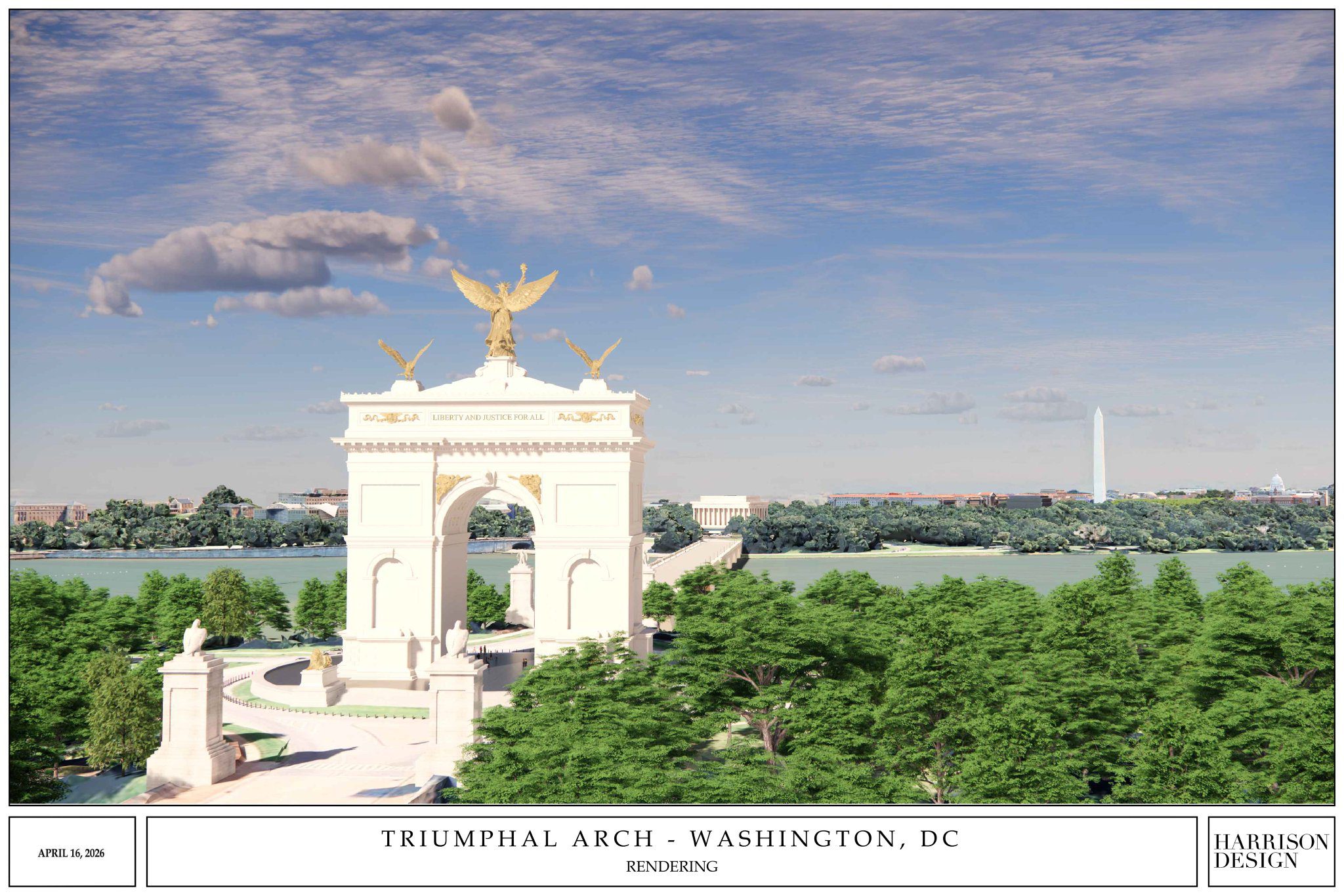


The monument—described by officials as a large, neoclassical arch—would be constructed at Memorial Circle near the entrance to Arlington National Cemetery, directly across the Potomac River from the Lincoln Memorial.
According to design plans, the structure would feature prominent gold accents, including a large winged female figure resembling Lady Liberty at the top, as well as gilded eagles and four lion statues positioned at the base. The arch would also display inscriptions such as “One Nation Under God” and “Liberty and Justice for All.”
At 250 feet tall, the proposed monument would be more than twice the height of the Lincoln Memorial and taller than Paris’s Arc de Triomphe, making it one of the largest structures of its kind in the world
Administration officials say the project is intended to honor American history and military sacrifice while creating a new national landmark ahead of the country’s semiquincentennial in 2026.
The design, produced by Harrison Design, has been submitted to federal planning bodies including the U.S. Commission of Fine Arts and the National Capital Planning Commission, both of which must approve major construction projects in the capital region.
However, the proposal has already drawn criticism from some architects, preservation groups, and veterans organizations. Opponents argue the large-scale structure could disrupt the historic landscape surrounding Arlington National Cemetery and the National Mall, while others have raised concerns about the need for congressional approval under federal law governing commemorative works.
Legal challenges have also emerged, though some have been temporarily paused as the review process continues.
The project remains in the planning stages, and no construction timeline has been finalized as federal reviews and potential legal hurdles continue.