


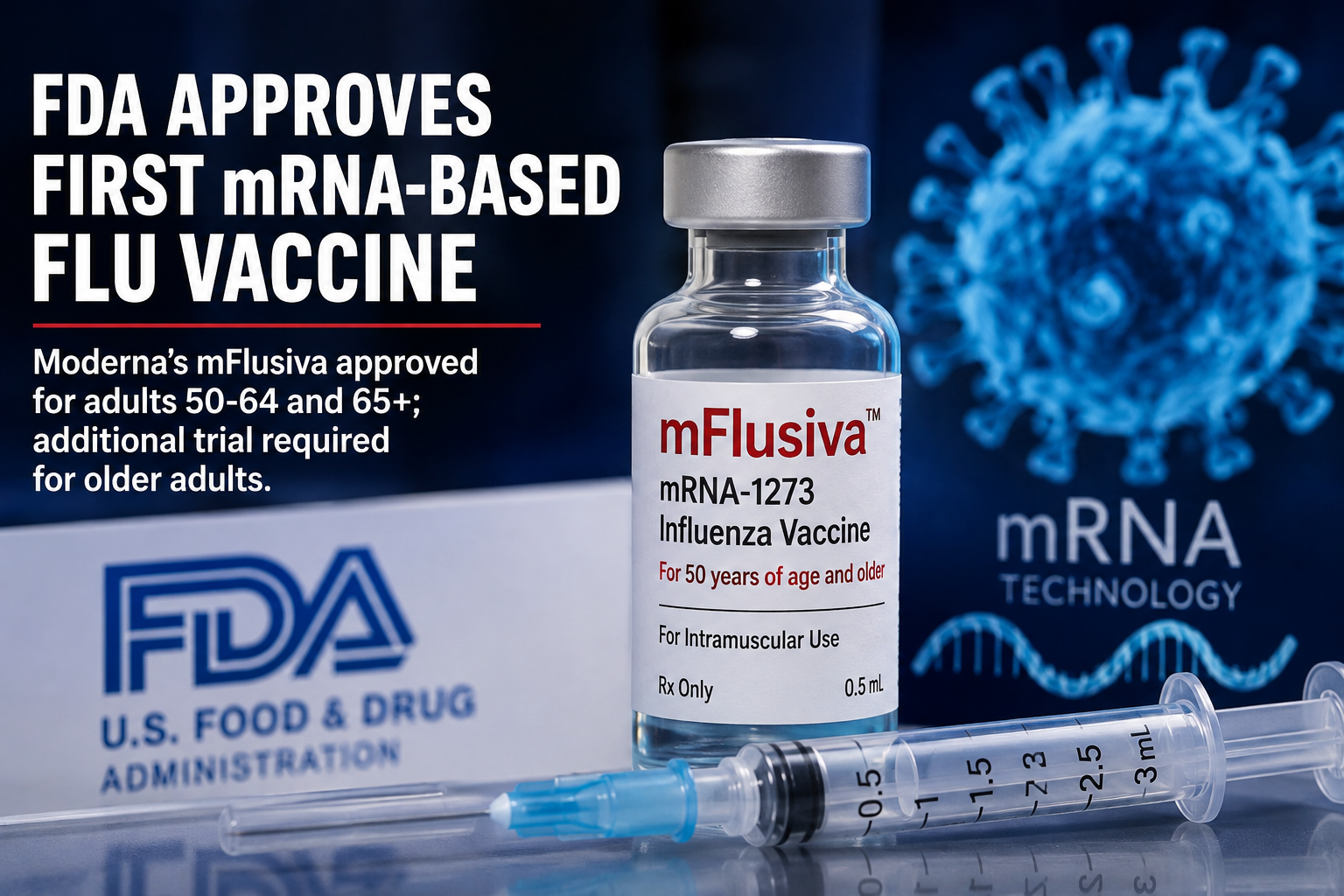
(LOOTPRESS) – The U.S. Food and Drug Administration (FDA) has approved the nation’s first influenza vaccine that uses mRNA technology, marking a significant milestone in vaccine development.
The vaccine, mFlusiva, developed by Moderna, was approved Wednesday for adults ages 50 to 64 and adults 65 and older. As part of the approval, the FDA requires Moderna to conduct an additional clinical trial in adults 65 and older to further evaluate the vaccine’s safety and effectiveness.
According to Moderna, a late-stage clinical trial found mFlusiva to be approximately 27% more effective than a standard flu vaccine. The study included more than 40,000 older adults across 11 countries, including the United States.
Unlike traditional flu vaccines, which are produced using egg- or cell-based methods and can take about six months to manufacture, mRNA vaccines can be developed much more quickly. Moderna said it can produce mFlusiva within two to three months after selecting the influenza strains expected to circulate during the upcoming flu season.
Health experts have long viewed mRNA technology as a promising advancement for influenza vaccines because it allows manufacturers to respond more quickly to changing flu strains.
Seasonal influenza hospitalizes hundreds of thousands of Americans each year and causes tens of thousands of deaths, according to the Infectious Diseases Society of America. Older adults and young children are among those at the greatest risk of severe illness.
Traditional flu vaccines typically range from 22% to 56% effectiveness, depending on how well the selected vaccine strains match the viruses circulating during a given season.
The approval comes despite ongoing debate surrounding mRNA technology. Health and Human Services Secretary Robert F. Kennedy Jr. has previously criticized mRNA vaccines and has called for additional scientific scrutiny of the technology.
Following the approval, the Department of Health and Human Services said the vaccine is entering the market with some of the strongest post-market study requirements the FDA has imposed, particularly for adults 65 and older.
The approval process was not without delays. Earlier this year, the FDA initially declined to review Moderna’s application, requesting additional data because the company compared its vaccine with a standard-dose flu shot in adults 65 and older rather than the high-dose vaccine typically recommended for that age group. The agency later reversed its decision, and in June, the FDA’s independent vaccine advisory committee unanimously recommended approval.
The most commonly reported side effects during clinical trials included injection-site pain, fatigue, and headaches. Moderna said the reactions were generally mild to moderate.
The company plans to study mFlusiva in additional age groups in the future and expects the vaccine to be available for the upcoming fall flu season.
Although the FDA has approved the vaccine, widespread use could face hurdles. Vaccines are typically recommended by the Centers for Disease Control and Prevention’s Advisory Committee on Immunization Practices (ACIP) before becoming widely available. However, the committee is currently unable to meet after a federal judge temporarily blocked it from convening.
Public health experts say physicians can still legally prescribe the vaccine, but without an ACIP recommendation, many private insurance plans may not cover it, and federal vaccination programs such as Vaccines for Children and Medicaid could face limitations in distributing the new shot.


