


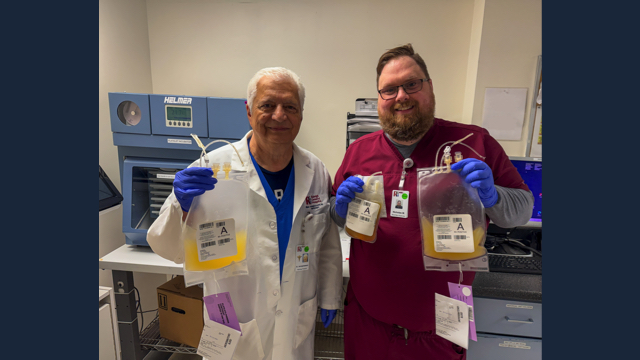
BECKLEY, WV (LOOTPRESS) – Raleigh General Hospital has advanced its ability to respond to life-threatening emergencies with the implementation of cold-stored platelets and liquid plasma, critical blood products used in the treatment of severe bleeding, trauma, and Massive Transfusion Protocol (MTP) activations.
As a Level III Trauma Center, the highest designation within a 55-mile radius, Raleigh General Hospital is now only the second healthcare facility in the state to offer both of these capabilities, further strengthening access to lifesaving care.
“This advancement strengthens our ability to respond quickly in high-acuity situations,” said Dr. Bijan Amirghassemi, Medical Director of Transfusion Services at Raleigh General Hospital. “Cold-stored platelets and liquid plasma allow us to act immediately when patients are experiencing severe bleeding, giving our teams the tools they need to intervene without delay. This also allows extended shelf life supporting increased daily availability of these blood products.”
Cold-stored platelets are specifically intended for the treatment of active bleeding when conventional platelets are not readily available or practical to use. Their implementation supports patients experiencing critical bleeding events, including trauma, cardiovascular surgery, high-risk obstetrics, and other emergent situations. These platelets are not used for preventative transfusions, but instead play a vital role in acute, lifesaving care.
This is impactful for hospitals like Raleigh General that serve a broad patient population while maintaining readiness for high-risk emergencies. Facilities that support trauma, surgical, and acute bleeding patients, particularly in rural or regional settings, benefit from the flexibility and availability of these products.
In addition, the introduction of liquid plasma further enhances the hospital’s ability to respond immediately to massive bleeding events. Unlike traditional plasma, liquid plasma is never frozen and is stored refrigerated, allowing for rapid access in emergency situations. Its availability provides care teams with greater flexibility to quickly stabilize patients and administer additional blood components as needed.
“In trauma care, timing is everything,” said Dr. Dana Miller, General Surgeon, and Trauma Specialist at Raleigh General Hospital. “Having immediate access to these blood products allows us to move faster in critical moments and provide the level of care our patients need when it matters most.”
Raleigh General Hospital remains committed to investing in advanced technologies and clinical capabilities that support high-quality care and improve outcomes for the communities it serves.


