


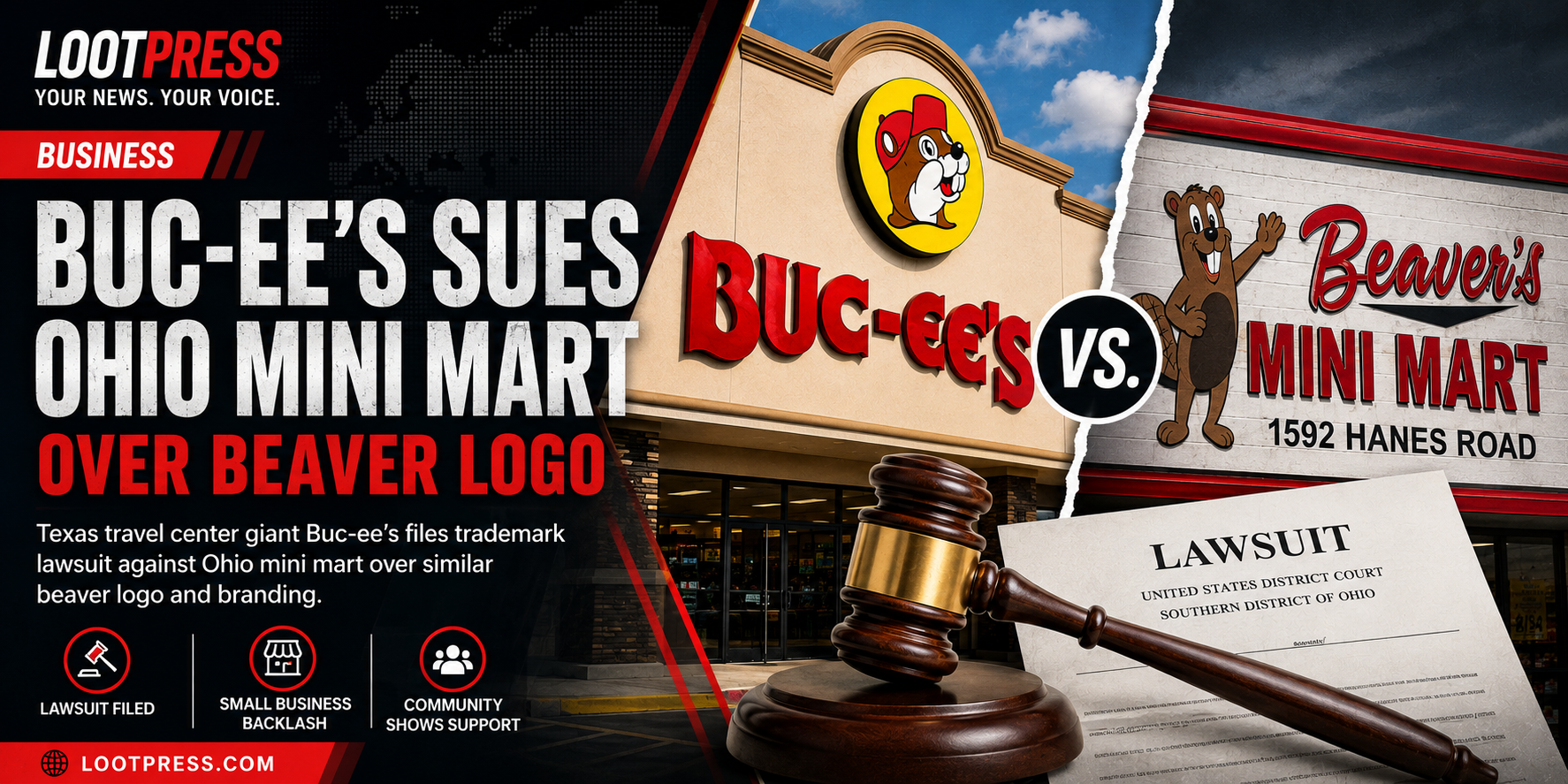
(LOOTPRESS) – A legal battle between Buc-ee’s and a small Ohio convenience store is drawing national attention after the Texas-based travel center chain filed a federal trademark infringement lawsuit over a cartoon beaver logo.
The lawsuit, filed in the U.S. District Court for the Southern District of Ohio, accuses Beaver’s Mini Mart in Beavercreek of using branding that is too similar to Buc-ee’s well-known beaver mascot. Buc-ee’s claims the Ohio store’s smiling cartoon beaver, along with its use of red coloring and similar branding elements, could confuse customers into believing the businesses are connected.
According to the complaint, Buc-ee’s is seeking a court order requiring Beaver’s Mini Mart to stop using the logo, destroy merchandise featuring the design, and turn over profits allegedly earned through the disputed branding.
The owners of Beaver’s Mini Mart say they were blindsided by the lawsuit. The family-owned business has operated for about a decade—years before Buc-ee’s opened its first Ohio location nearby earlier this year. Store representatives argue their branding reflects the city’s identity, noting that Beavercreek has long embraced beaver-themed imagery.
The lawsuit has prompted widespread criticism from local residents, business owners, and elected officials, many of whom have accused Buc-ee’s of targeting a small business. Several Ohio businesses have publicly voiced support for Beaver’s Mini Mart, while apparel company Cincy Shirts has launched a fundraiser selling T-shirts to help cover the store’s legal expenses.
The dispute comes just weeks after comedian John Oliver highlighted Buc-ee’s history of aggressively defending its trademarks during a segment on HBO’s Last Week Tonight. The timing has fueled additional public scrutiny of the company’s legal strategy.
Buc-ee’s has a long history of filing trademark lawsuits against businesses it believes use logos or branding that too closely resemble its iconic beaver mascot. Over the years, the company has pursued legal action against several convenience stores and retailers in an effort to protect its intellectual property.
The case remains pending in federal court.


