


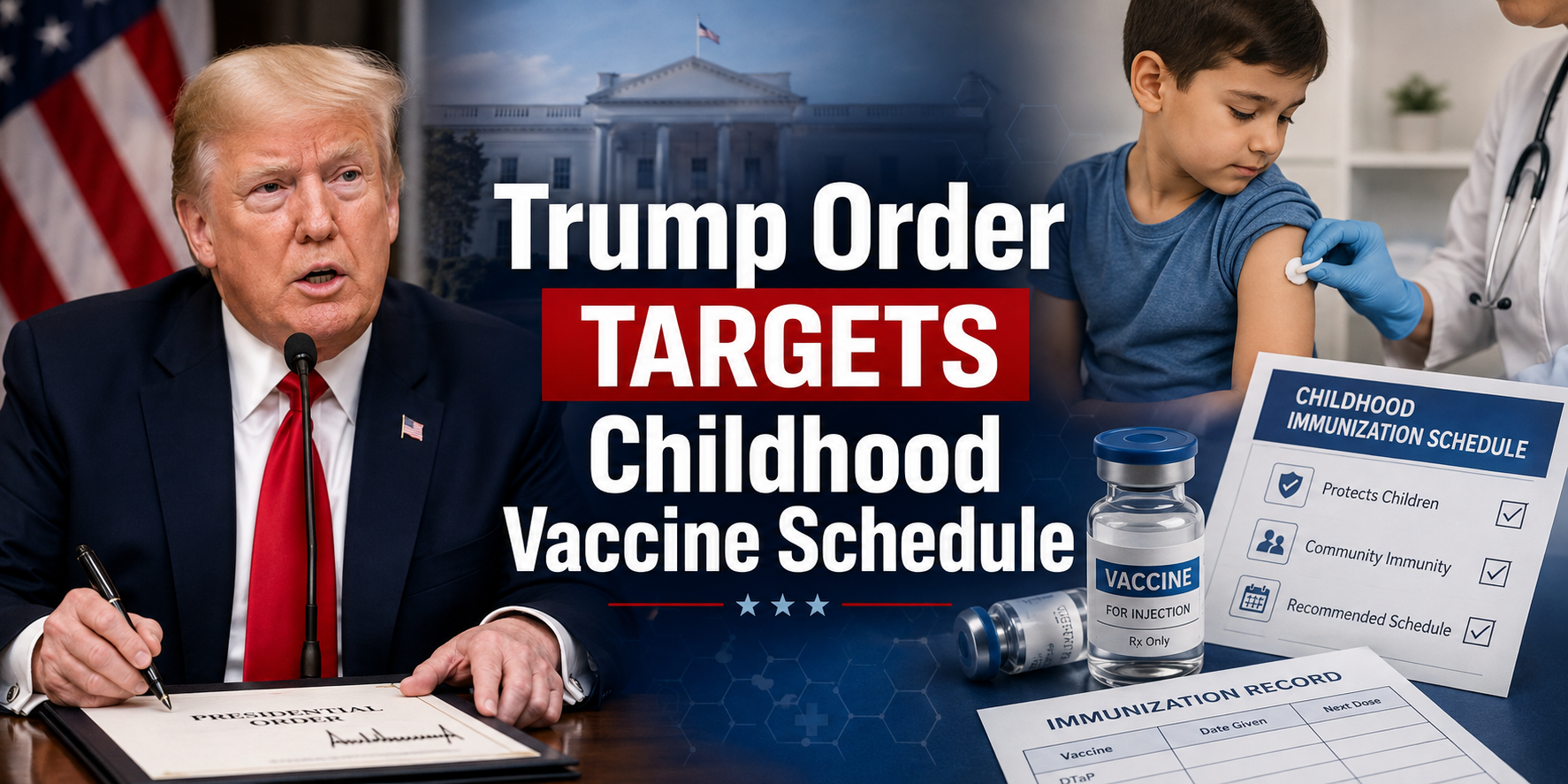
WASHINGTON, DC (LOOTPRESS) — President Donald Trump has signed an executive order calling for major changes to the nation’s childhood vaccine recommendations, including reducing the number of diseases for which vaccines are routinely recommended for all children from 18 to 11.
Trump signed the order Monday, Aug. 10, describing the new framework as the administration’s “Gold Standard Childhood Vaccine Recommendations.”
Under the order, vaccines routinely recommended for all children would cover 11 diseases: measles, mumps, rubella, diphtheria, tetanus, pertussis, polio, Haemophilus influenzae type B, pneumococcal disease, human papillomavirus, or HPV, and varicella, commonly known as chickenpox. (The White House)
Other vaccines would be moved into separate categories based on a child’s risk factors or discussions between parents and healthcare providers.
Vaccinations or immunizations for hepatitis A, hepatitis B, meningococcal disease, dengue and respiratory syncytial virus, or RSV, would be recommended for certain high-risk groups or populations under the plan. Hepatitis A, hepatitis B, rotavirus, meningococcal disease, influenza and COVID-19 could also be considered through what the administration calls “shared clinical decision-making.” (The White House)
The administration says the change is intended to bring the United States more closely in line with vaccine recommendations used in other developed countries while giving parents greater flexibility in making vaccination decisions.
The White House says the previous Centers for Disease Control and Prevention schedule recommended routine immunizations protecting children against 18 diseases. (The White House)
Order calls for separating MMR vaccine
One of the most significant changes involves the measles, mumps and rubella vaccine.
The executive order calls for the commonly used combination MMR vaccine to eventually be administered as three separate vaccines — one each for measles, mumps and rubella — once individual versions of the vaccines become available domestically.
The order also states that, “to the maximum extent feasible,” childhood vaccines should be administered during separate medical visits rather than multiple vaccines being given during the same appointment. (The White House)
The administration directed the Department of Health and Human Services to develop plans within 90 days for expanding access to separate vaccines, beginning with MMR, while continuing to make combination vaccines available. (The White House)
States encouraged to review school vaccine requirements
The executive order does not itself rewrite individual state vaccination laws.
Instead, Trump is encouraging states and territories to review their vaccine requirements, including those governing school enrollment, and consider changing them to reflect the administration’s new recommendations. (The White House)
Federal agencies were also directed to review the recommendations and take steps to advance them where allowed by law.
The order additionally directs the U.S. attorney general to support certain legal challenges involving state vaccine requirements when administration officials believe those requirements conflict with federal protections involving religious freedom, parental authority, disability accommodations or equal protection. (The White House)
Medical groups raise concerns
The changes are drawing criticism from physicians and public-health organizations that argue the existing childhood vaccine schedule has been developed through decades of scientific review.
Reuters reported that physicians have warned reducing universal vaccine recommendations could leave more children vulnerable to preventable diseases. The World Health Organization also defended established vaccination schedules Tuesday, saying decisions about which vaccines children receive and when they receive them are based on extensive scientific evaluation of disease risks and immune-system development. (Reuters)
The order comes amid an ongoing national debate over vaccine policy under Trump and Health and Human Services Secretary Robert F. Kennedy Jr.
The administration maintains that its approach will increase parental choice, improve vaccine safety monitoring and better align the American childhood vaccination schedule with recommendations in other developed nations. (The White House)
The executive order also requires federal officials to continue evaluating the risks and benefits of childhood vaccines and research alternative vaccine ingredients, timing and sequencing.
The changes are not expected to immediately eliminate access to vaccines that are currently available. The executive order specifically calls for preserving access to existing vaccines even when they are no longer included among those routinely recommended for every child.


