



CHARLESTON, WV (LOOTPRESS) – The West Virginia Department of Health’s Bureau for Public Health is urging residents to take precautions as the number of confirmed cyclosporiasis cases linked to a multi-state outbreak continues to climb.
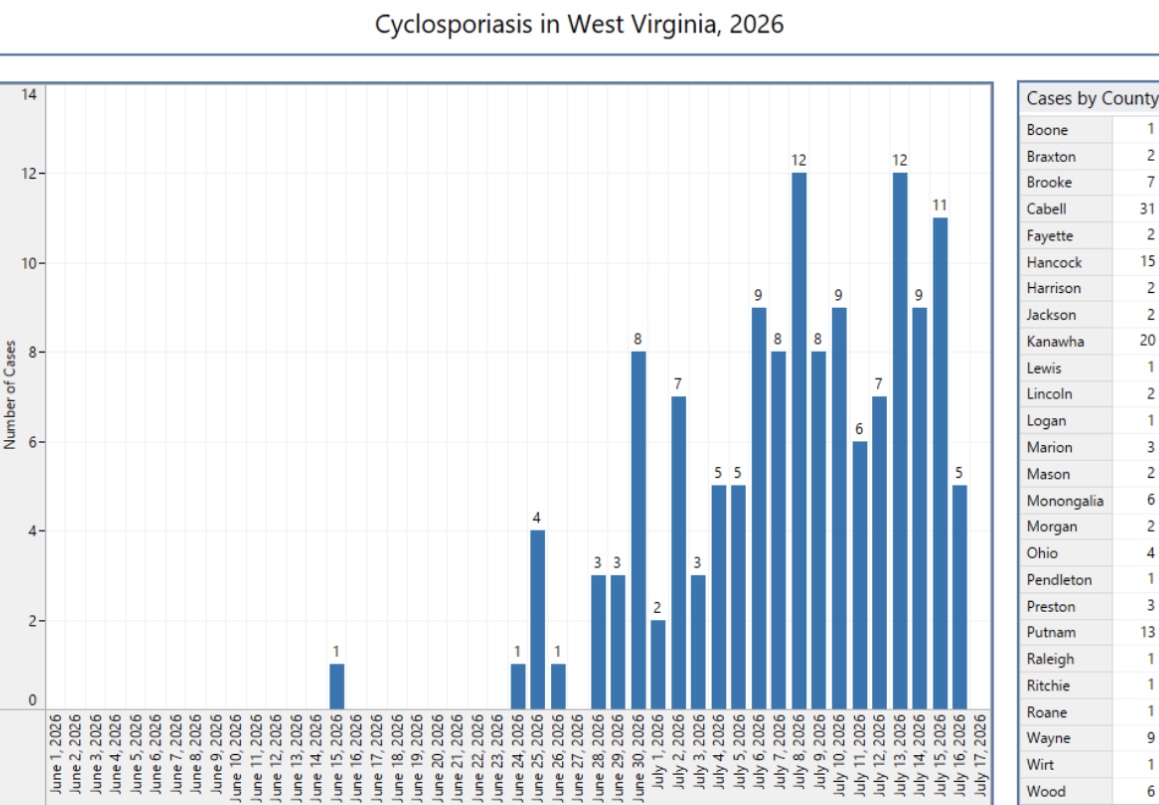
As of Friday, July 17, West Virginia has identified 139 cases associated with the outbreak, including 15 hospitalizations, with illnesses reported across 26 counties.
According to state health officials, the Bureau for Public Health is working with the Centers for Disease Control and Prevention and the U.S. Food and Drug Administration to investigate the source of the outbreak.
Health officials are advising consumers to avoid eating shredded iceberg lettuce served at Taco Bell locations in West Virginia while the investigation continues.
Anyone who develops symptoms of cyclosporiasis—particularly if they ate shredded iceberg lettuce from a Taco Bell restaurant during the previous two weeks—is encouraged to contact a health care provider. Officials also recommend thoroughly cleaning and sanitizing any surfaces or containers that came into contact with the lettuce.
Cyclosporiasis is an intestinal illness caused by the parasite Cyclospora cayetanensis. Common symptoms include watery diarrhea, loss of appetite, stomach cramps, nausea, fatigue and weight loss. Symptoms typically begin about one week after exposure and can last for several weeks if left untreated.
A chart released by the Bureau for Public Health shows cases steadily increasing since mid-June, with the highest daily totals reported during the second week of July before remaining elevated through July 17.
The county breakdown shows the largest numbers of cases in Cabell County (31), Kanawha County (20), Hancock County (15) and Putnam County (13).
The investigation remains ongoing as public health officials work to identify the source of the contamination and prevent additional illnesses. Residents experiencing sudden or persistent gastrointestinal illness, especially ongoing diarrhea, are encouraged to seek medical evaluation and testing.
State officials said updated case counts, outbreak information and public health recommendations will continue to be posted on the West Virginia Bureau for Public Health’s cyclosporiasis outbreak webpage.


